

March is Colorectal Cancer Awareness Month, a time to focus attention on colorectal cancer, which is the fourth most common cancer in the United States, according to the Centers for Disease Control and Prevention. While overall incidence has declined due to improved screening and early detection, the sharpest increase is occurring in adults under age 50, where rates are rising by about 2.9% per year. Incidence is also increasing slightly among adults ages 50–64, while continuing to decline in adults age 65 and older, according to the American Cancer Society. These trends underscore the urgency of focusing outreach to younger adults, the group experiencing the most significant rise in colorectal cancer incidence. Persistent disparities further heighten this need: people of color experience higher rates of late‑stage diagnosis and worse colorectal cancer outcomes, driven by longstanding inequities in access to preventive care and lack of trust in the health care system.
Screening is the only way to prevent colorectal cancer. For the average person, with no family history, the U.S. Preventive Services Task Force recommends that adults ages 45 to 75 be screened for colorectal cancer but could start younger for some patients.
Tony Orr, Sr., of York, knows the importance of getting screened. His mother, Betty, was diagnosed with colorectal cancer and underwent chemotherapy, but died in 2014. This spurred Orr and four of his siblings to get their first colonoscopies, and they all now get tested every three to five years.
“For anyone who may be too scared or embarrassed to get a colonoscopy, I would tell them to go ahead and get it,” said Orr. “There is nothing to be afraid of. It can save your life.”
Those with a close family member who have been diagnosed with colon cancer are 2-4 times more likely to develop the disease.
In 2024, the WellSpan Health Disparities and Community Partnerships teams began a journey grounded in listening to better understand screening differences within different population groups. Early colorectal cancer listening sessions revealed consistent themes: limited knowledge about screening, deep‑rooted mistrust, uncertainty navigating the health care system, and practical barriers such as transportation and appointment availability. These insights made one thing clear: improving colorectal cancer screening requires more than education; it requires trust, relationships, collaboration, and dialogue.
Using insights from the listening sessions, the teams reshaped their approach. Community outreach shifted from a traditional model to a one‑size‑fits‑one strategy: tailored, responsive, and grounded in each person’s specific concerns and experiences.
In partnership with community‑based organizations, including faith‑based groups, the health disparities team worked alongside WellSpan clinical teams to attend community sessions, answer questions directly, and build rapport. The WellSpan quality team streamlined the referral process by applying what was learned from the listening sessions. At community events, team members encouraged and empowered individuals with a WellSpan provider to talk with their clinical teams about available and recommended screenings. For those interested in a FIT (fecal immunochemical test), a simple MyWellSpan link allowed them to complete the questionnaire and, if eligible, receive an at‑home kit within two weeks. For this test, you use the kit to collect a small sample of your stool and mail it to a laboratory where it will be checked for tiny amounts of hidden blood from your lower intestines.
These changes reduced confusion, improved access, and demonstrated a commitment to finding a better way. To date, three listening sessions have been conducted, resulting in 15 community members enrolling to receive colorectal cancer screening tests.
By 2025, outreach expanded through a trusted community model. Consistent presence, motivational interviewing, and navigation support helped residents feel seen and supported. Twenty‑five outreach events brought colorectal cancer education to workplaces and community spaces, with concentrated efforts in barbershops across York, Lancaster and Lebanon, locations where younger adults, particularly men, naturally gather. Across these events, outreach efforts have provided colorectal cancer screening information and preventive health education to more than 1,500 individuals, strengthening community awareness and engagement in early detection initiatives.
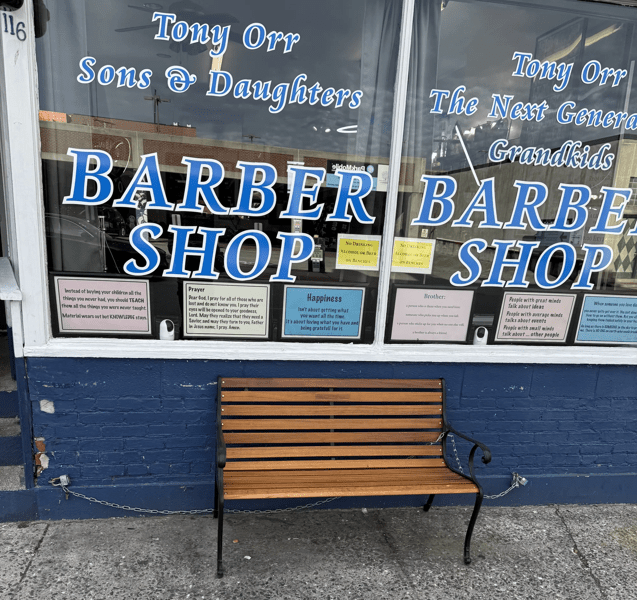
Tony Orr Sons and Daughters Barber Shop in York offers clients cuts and colorectal cancer screening information.
Orr, who is the owner of Tony Orr Sons and Daughters Barber Shop in York, was enthusiastic about participating in WellSpan Health’s efforts to expand its colorectal cancer outreach.
“A lot of people in our community wait until it’s too late,” he said. “We need to get to them early.”
His story underscored the importance of reaching younger adults, the very group experiencing the fastest rise in colorectal cancer incidence.
Tony’s voice, and the trust built through ongoing presence, transformed outreach into partnership. This work shows that when communities are heard, supported, and met where they are, screening becomes not something to fear, but an act of empowerment, prevention, and legacy.
Michael’s story
For years, York Police Commissioner Michael Muldrow said he “ducked” having a colonoscopy, despite his wife Nakesha’s urging to do so.
“I was a hard case,” he said. “I had a fear of the level of intrusiveness, and I didn’t want to know the outcome. In my head, I would rather not know and just have it [cancer] hit me.”
Muldrow, who is 51, got his first colonoscopy in 2025, which he credits to his wife’s persistence and encouragement from his friend, Diaz Woodard, a community outreach coordinator at WellSpan who helps oversee the colorectal cancer screening outreach program. Through Diaz, he learned about the seriousness of the disease and the stigma and fear that many men like him have about screening.
According to Muldrow, the most difficult part was the preparation for the colonoscopy, which requires a patient to drink liquids, change their diet, and take laxatives to clean out the bowel.
“I was nervous and fearful through it all, but my wife was there the whole time,” he said. “It helped to have my wife go through the journey with me. It helped get me through the doors.”
Overcoming his fear, which was largely based on lack of information, was a big deal for Muldrow.
“I had a fear for so long that I was going to feel violated,” he said. “I expected it to be done when you’re awake, so I ducked it with every fiber in my body. After all that, I discovered they put you to sleep. My allergy test was worse than that.”
His courage paid off: no polyps were found in his colonoscopy.
“I felt so good, and honestly, then I wondered why I waited so long and was so hesitant,” he said.
To learn more about colorectal cancer screening at WellSpan, go here. Looking for a primary care provider to help you stay up to date on your screenings? Go here.
Tags:
